

Going Medieval
Every fish tale is a parable

Can you pull in leviathan with a fishhook
or tie down its tongue with a rope?
Can you put a chord through its nose
or pierce its jaw with a hook?...
If you lay a hand on it,
you will remember the struggle and never do it again!
Any hope of subduing it is false;
the mere sight of it is overpowering.
The Old Testament, Job 411
To see the big picture of a small place like Potomac Creek, it might be best to start with a fish story.
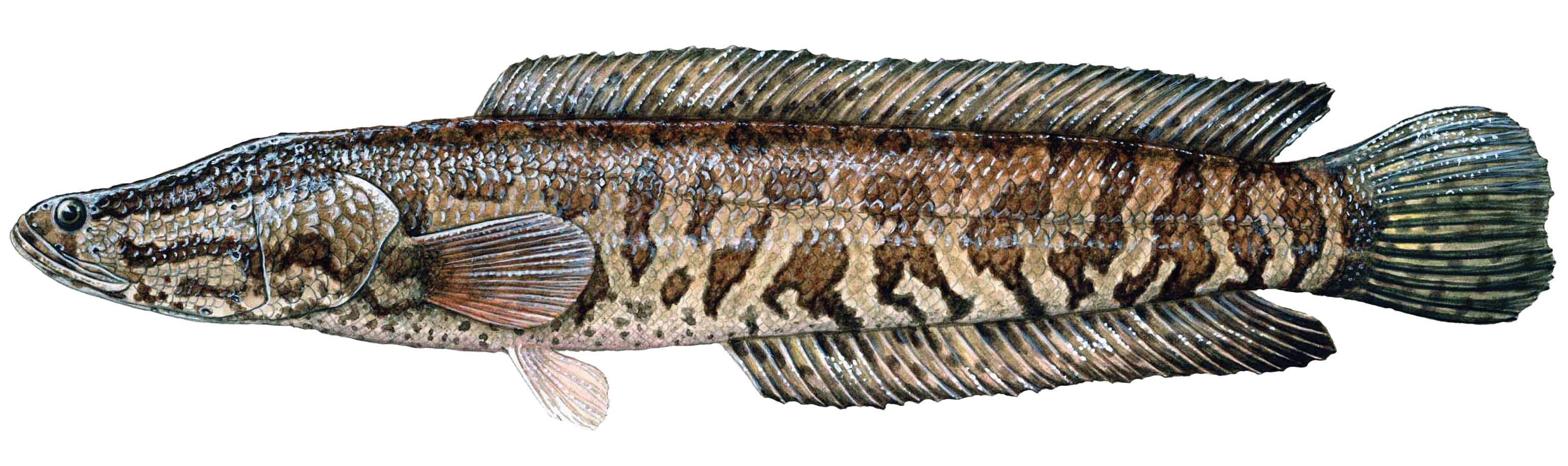
The northern snakehead is a beautiful fish – although opinions vary strongly.
I caught my first one tossing lures off a tiny bridge over Potomac Creek. It was a striking catch: a twenty-inch cigar, glossy with slime, wearing the blotchy camouflage of a Burmese python. So much of fishing’s addictive appeal lies in moments like this, when a portal opens to what swims below.
Yet hooking the invasive fish was also a bit of a let-down. It didn’t look that different from the “living fossil” bowfin my younger son caught a few summers before using bloodworms for bait.
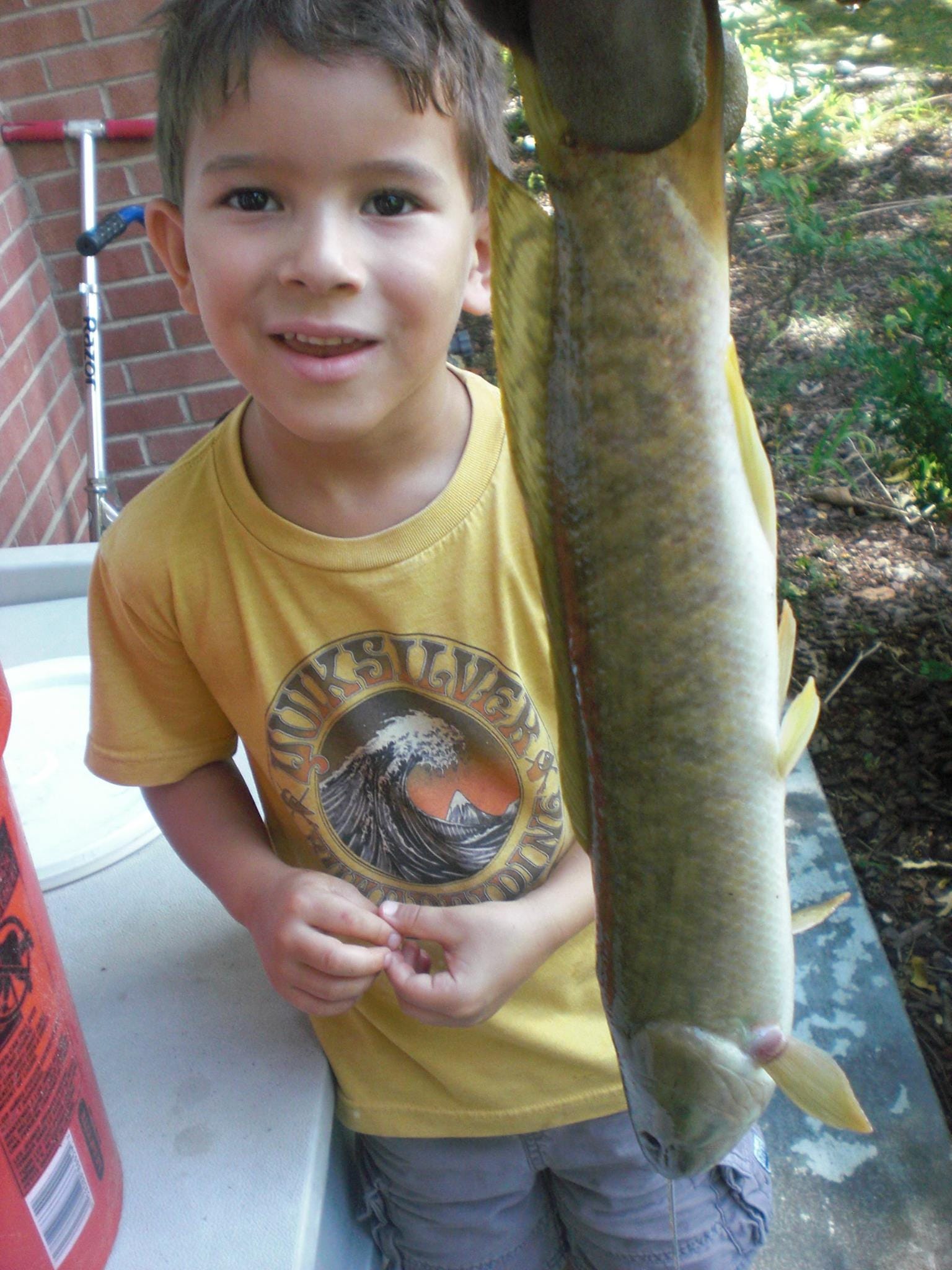
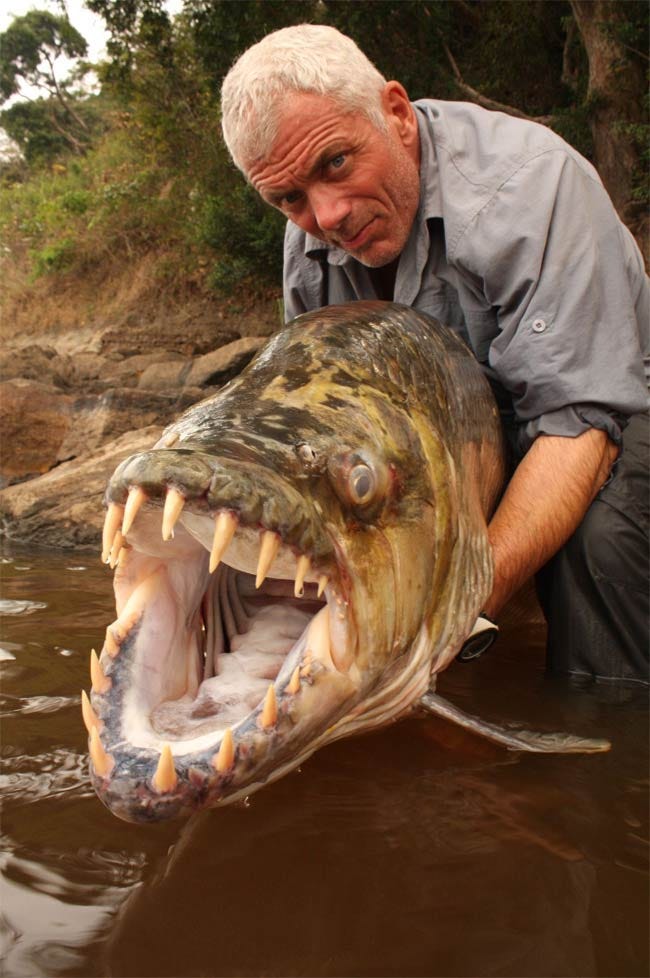
The stories and rumors about the snakehead had me expecting something closer to an alligator.
Take this cartoonish lede from the July 12, 2002 Baltimore Sun, from when the fish was first spotted on the East Coast:
State investigators revealed yesterday the origin of the ferocious northern snakehead fish that have turned a muddy Crofton pond into a site of alien infestation: They came from New York.2
“Ferocious,” “alien infestation,” and “They came from New York” – all in one sentence. Human-fish violence was forecast from the start.
Once Maryland officials learned of the snakeheads’ presence, biologists electroshocked the pond, and ninety-nine juvenile snakeheads floated to the surface. A formal inquiry followed into how the natives of Asia got in there. Within weeks, state investigators announced that they’d found the hobbyist who had dumped the fish into the pond. In a press briefing, Captain Sanders of the Maryland Natural Resources Police clarified that two snakeheads – originally from New York – had outgrown their owner’s aquarium and that the man who released this piscine Adam and Eve “had no idea it would create the situation we have today.” No charges were filed because the statute of limitations had expired. The police even withheld the man’s name to ensure his safety.
One wonders from whom. The fish?
And then, like medieval clergy trusting God will provide a just outcome, the authorities punished the pond. They surrounded it with guards and poisoned it with the pesticide rotenone, killing every guilty fish (and all else) within.
Hopes of subduing the alien proved false, nonetheless.
Fugitive snakeheads quickly spread southward into Virginia’s silty upper rivers and creeks. Scientists warned that an invasive predator that breathes on land could ruin a valuable ecosystem. Migratory shad and other sport fish in the aquatic food chain might be displaced or simply gobbled up. Things looked grim.
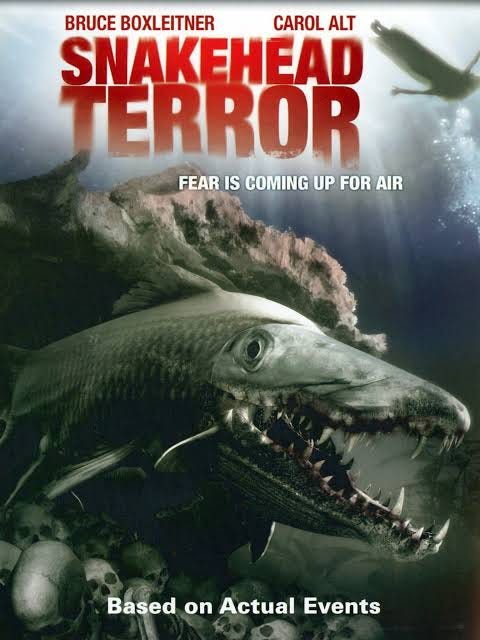
Naturally, for a few people the alarm over the new “Frankenfish” also signaled opportunity, although it’s hard to believe movies like “Snakehead Terror” and “Swarm of the Snakehead” made anyone rich. (Those are real titles.)
Wildlife supporters fretted over the snakehead, too. Apart from being a college professor and a fiddler with a band, I’m a conservationist. For years, I helped lead a non-profit organization devoted to protecting local ecosystems. Ideally, conservationism – the ethos and practice of leaving room for nature – is about listening to voices.
But millennia of history make clear that we vastly prefer the songs of our own species. We preserve historic places like Birkenau and Nineveh but allow plants and animals to disappear. No one asks the sparrows’ thoughts when a bird hits a plate-glass window; when a billionaire tweets he wants to colonize Mars – that’s when we pay attention. Then, you can bet people will also start raising concerns about keeping the Red Planet the way it was. Their voices will be heard, too. But then others will remind us that our species’ needs come first, pulling everyone back around the wheel of debilitating inertia.
It will be done on Mars as it is on Earth. We always give ourselves two opposable thumbs up.
My unlucky fish was in surprisingly low water when it violently bit the plastic frog I’d tossed by a log. Such aggressive strikes have made snakeheads wildly popular with Virginia anglers. The fish might have been guarding its children, which school in balls of nervous minute fry.
But the state law of the time held that a caught snakehead cannot be allowed to live. As the fish lay on the ground, my sons and I knelt to admire its dagger-like teeth, its muscularity and glistening smoothness, before I killed it with heavy stick-blows to the head.
Anthropocentrism’s gravity is so strong; we inevitably measure the value of all things, on Mars or elsewhere, against our own need.
And every fish tale is a parable.
***Note: This excerpt is adapted from the first chapter of my book manuscript. If you like this, please consider subscribing — it’s free — and sharing with friends. Thank you!
“Can you pull in leviathan”: The Bible (New International Version). Job: 41. The Bible Gateway. https://www.biblegateway.com/passage/?search=Job%2041&version=NIV.
“State investigators revealed” and news account: Stephen Kiehl, “Hobbyist freed snakeheads in Md. Pond.” Baltimore Sun (July 12, 2002). https://www.baltimoresun.com/news/bs-xpm-2002-07-12-0207120042-story.html.