

Woo-woo
Mumblings

The late comedian George Carlin wrote a book called Brain Droppings, in which he published jokes and ideas that filled his cabinets but, if I remember correctly, didn’t always make it into his stand up routines.
I do something similar here at times. Call it “Mumblings.” Some of what I put out is unfinished and inconsistent — I know that. But I float it anyway.
In part, that’s because I suspect two or more dissimilar thoughts are connected even if I’m not yet sure how. And in part, that’s because I think that what I’ve written contains an intuition or thematic string worth pulling on. Perhaps I just haven’t summoned the courage to do so. Or, I’m afraid of what I might find if I did.
Today’s brief essay is one of those. Make of it what you will.
***
The stories in No Lines in Nature are for those who like to peer into the natural and metaphysical architecture of places. I wrote that in this Substack’s introductory post.
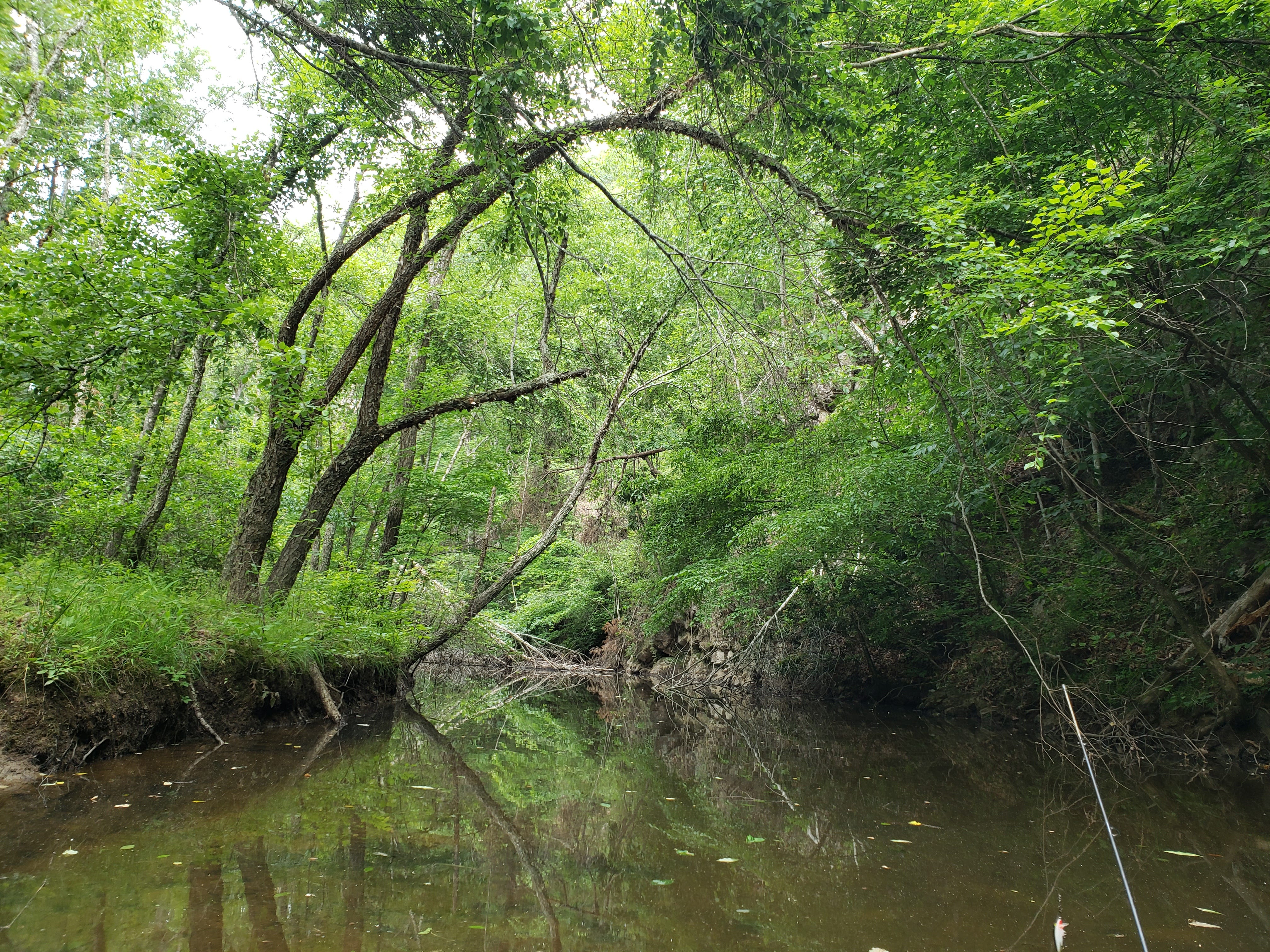
Initially, I came to this approach by reflecting on the work of land conservation, especially as it relates to my family home on Potomac Creek. For most conservationists, perpetuity of place is the coin of the realm. The goal is maintain an undeveloped area forever, at least in human terms.
Yet as my curiosity encompassed Potomac Creek’s peoples, ecology, and more, the hardest lesson I learned is that the way “perpetuity” is applied today will not work for actual conservation. We are too focused on acreage — on the spaces that we as a species see, measure, and can most easily relate to. That is how we understand place.
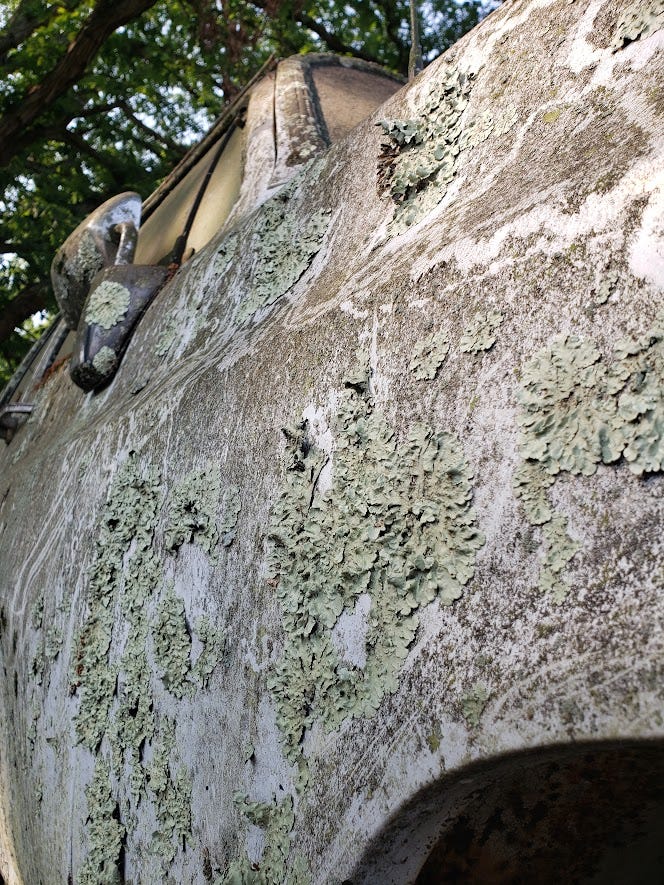
As I also wrote in my introductory post, you pick up a stone in the path, find it smooth, and toss it back. You pick up another and see moss or lichens growing on it, and that is something entirely different. What makes a “place” is not the human connection to it, but life. The only workable meaning of perpetuity, therefore, is one that apprehends the collective, jumbled consciousness of homo sapiens and all other species.
Otherwise, Potomac Creek is just a wet rock.
The following statement may sound trite, even a bit woo-woo. But after decades of teaching political science to university students – including topics as removed from conservation as war and peace – I’ve found that by semester’s end I can usually sort my students into two groups: those that see themselves as a part of the natural world, and those who don’t.
It’s a matter of mindedness, of empathy. Only once we consciously embed ourselves into the world “taken on its own terms,” as John Gray has put it, can we speak meaningfully of the rights of people, other living things, and even places.
This includes a right to conservation.
Anything that de-centers the way we see Potomac Creek is good, for a living world has no center. That is the thesis of No Lines in Nature.
Without this expanded idea of perpetuity, the Potomac Creek we see and know – in all its parts and meanings – will continue to diminish, as life here becomes thinner and thinner.
I’ll leave it at that.
I heard a climate change expert on NPR say to a caller,
“The best way to help the planet is to become less of an individual.” It seared onto my brain. Your piece reminds me of it.
Wow, this really struck me: “the living world has no center.” I’m looking forward to the continuation — thank you.
What do you think explains why some of your students experienced themselves as part of nature, while others felt separate from it? Did you notice any common pattern or recurring motifs behind these different perceptions?